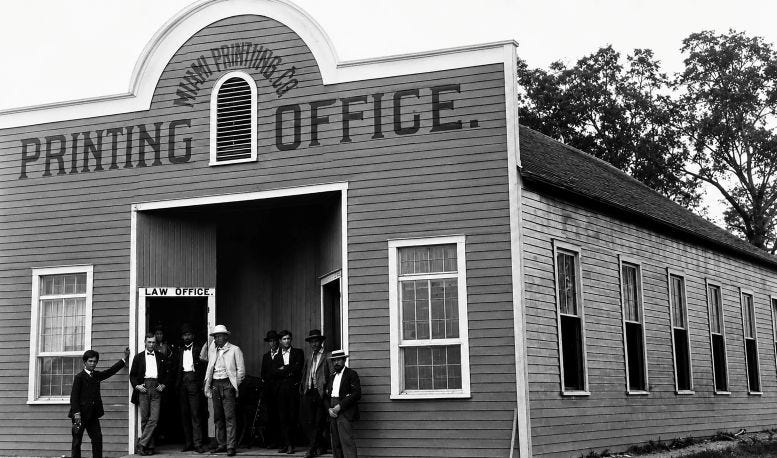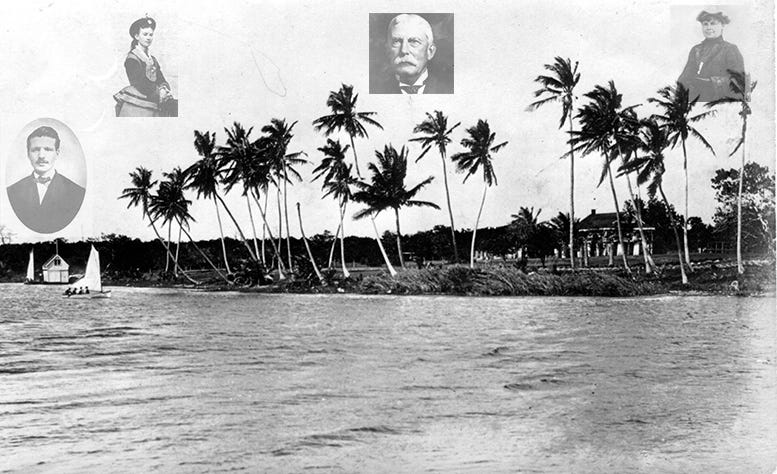
By the spring of 1896, the once-quiet outpost along the Miami River was bustling with activity, as preparations were underway to fulfill Julia Tuttle’s premonition of the small outpost along Biscayne Bay transforming into “one of the largest, if not the largest, cities in all the South.” A lifelong dreamer, Tuttle’s hopes for a thriving city were rapidly taking shape, with her long-held vision on the verge of becoming reality.
After the devastating freezes of 1894 and 1895, Henry Flagler dispatched James Ingraham south from Palm Beach to assess how far the cold had spread. Upon reaching Miami, Ingraham was welcomed by an old acquaintance, Julia Tuttle, who handed him a pristine orange blossoms, its leaves untouched by frost, to include with the plant samples he was gathering as proof that the frigid temperatures had spared the banks of the Miami River.
Encouraged by Ingraham’s favorable report, Flagler traveled to the region to see it for himself. Following his visit, he considered an offer from Julia Tuttle and William and Mary Brickell, who pledged portions of their land in exchange for his investment in developing a prosperous southern community. Flagler ultimately agreed to extend his railroad to Biscayne Bay, construct a luxury hotel, and lay out a settlement around it. Whether that new municipality should be incorporated as a “town” or a “city,” however, would soon become a matter of debate.
Land Granted by Julia Tuttle
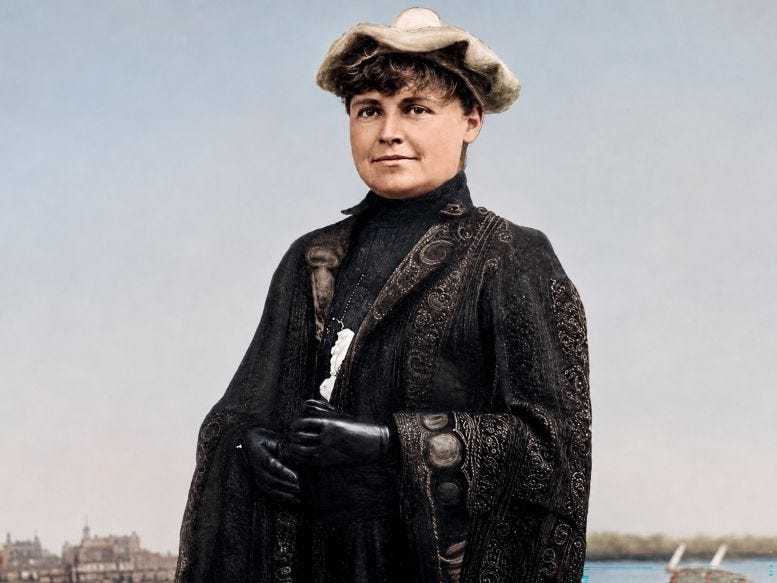
At the time Henry Flagler agreed to extend his railroad and help build a city, Julia Tuttle owned much of the land on the north side of the Miami River. As detailed in Miami, The Magic City by Arva Moore Parks (page 82), Tuttle conveyed half of her holdings, about 300 acres, to Flagler. This included 100 acres along the bay and riverfronts, excluding her 13-acre homestead and select parcels within what would later become the business district. In a shrewd move, Tuttle arranged the land transfer in alternating lots, ensuring the area’s development while maintaining a stake in its future growth.
The contract between Julia Tuttle and Henry Flagler included a specific condition: the luxury hotel he planned to build, the Royal Palm Hotel, could not obstruct her view of Biscayne Bay. Tuttle’s homestead, which once offered that unobstructed view, today is the site of the Miami Convention Center and the downtown Hyatt.
Between the hotel and the north bank of the Miami River, a beautifully landscaped garden, designed by Henry Coppinger Sr., was planted during the the construction of the hotel in 1896. The Royal Palm Hotel site was redeveloped into the Monarch at Met apartment complex, while the former Royal Palm Gardens is now the site of an assortment of buildings including the Epic Hotel and Aston Martin Residences.
The 66-story Aston Martin Residence was constructed on a 1.25-acre parcel of land that cost the developer $125 million to acquire. The land is located along the north bank of the Miami River and provide the value of great water views, but the land could have been acquired for $1.25 per acre a hundred years earlier.
Land Granted by Brickell Family
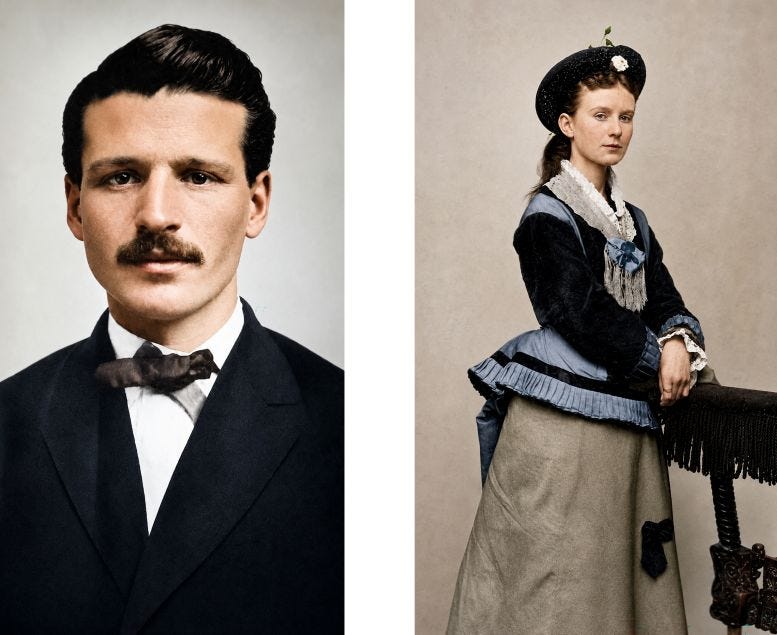
Before finalizing his agreement with Julia Tuttle, Flagler entered into a separate arrangement with Mary Brickell, who, according to James E. Ingraham, negotiated on behalf of her family. The Brickells offered parcels on the south side of the Miami River, along with land in Fort Lauderdale, but retained a portion of their property for themselves. Under the agreement, Flagler acquired the acreage west of present-day South Miami Avenue, while the Brickell family kept the land east of Avenue D, which was the original name of South Miami Avenue.
During the negotiations, Henry Flagler reportedly made a verbal commitment to build a bridge across the Miami River, linking the community north of the river with the Brickell lands to the south. The bridge was never constructed by Flagler’s organization, however, and the Brickell family, particularly William Brickell, later expressed frustration with the slow pace of development on the property they had conveyed to him. It would not be until 1928 that a bridge finally connected downtown Miami with Brickell Avenue.
Progress Necessitated Designation